
-

Print Glossary
-
An artificial watermark is a custom watermark produced using a special chemical or ink to create the effect of a watermark. These are mostly printed inks that can be viewed from only one side of the sheet.
-
A brochure made by folding a piece of paper into two equal parts.
-
Bindery refers to the cutting, folding, collating, drilling, and other finishing operations used in printing projects.
-
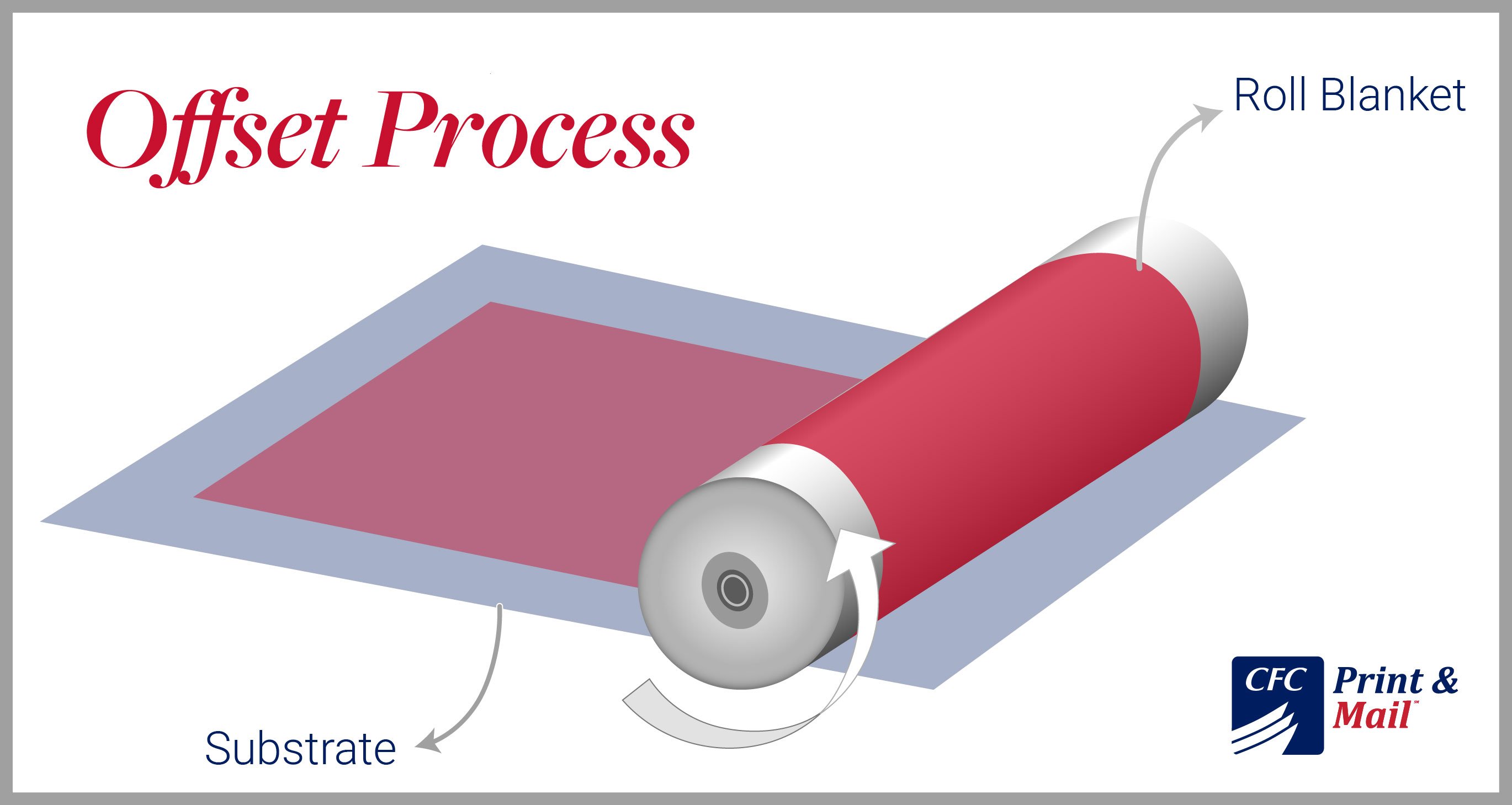
The blanket in the printing process is the rubberized surface material secured onto a cylinder onto which the ink is transferred from the plate and then to the paper.
-
Typically, in the design, the artwork is made to extend outside of the marked cut line. Bleeds extend beyond the document's cut line to ensure a white edge does not remain after cutting.
-
A grade of durable writing, printing and typing paper that is erasable and somewhat rigid.
-
A ruler that measures the thickness of paper by thousandths of an inch or mils.
-
Carbonless paper, also known as NCR paper, or no carbon required paper, is paper that transfers written or printed information on one sheet to the sheets beneath it.
-
CMYK is an abbreviation for Cyan, Magenta, Yellow, and Black ink system, also known as four color, full color, or Process color printing. Halftones are used to obtain a broader range of print colors than in traditional offset printing.
-
Coil Binding, or spiral binding, is when a stack of paper with holes punched on one side is joined together by a metal or plastic coil. Commonly used for reports, proposals and manuals. Documents bound with coil have the ability to lay flat and can rotate 360 degrees.
-
Collating means gathering sheets in a determined order. Commonly used for multiple-part forms. See carbonless paper.
-
Continuous forms are manufactured with pin feed holes on the left and right sides. Because of the automation, continuous form printing allows for long print runs without intervention and saves time and money.
-
Digital Micro Validation is a type of signature line verification. It is consecutively numbered micro print located in the signature line of our digitally imprinted check offering at CFC. The consecutive check number is a clever and overt authentication feature that matches the consecutive gothic number while actuating from check to check. This exclusive feature is available at no additional charge.
-
DPI is an abbreviation that stands for "dots per square inch" used in digital imaging to describe print quality. Most documents print at 300 dpi or higher.
-
Fibers in regard to document security, are included within security check paper stock. Visible fibers on our paper stock are small, multicolored specks that disappear when scanned or copied. Invisible fibers are seen with a UV light and also act as a fraud deterrent.
-
Fulfillment services is a term used to describe the processing of mailing, packaging products or other marketing related functions.
-
Grain refers to how the paper fibers are constructed on a piece or sheet of paper. This can benefit or impede how well a paper folds or cuts.
-
Holographic foil is the foil used to imprint holographic images on paper documents. Holographic foil is often used as a security feature to prevent the unauthorized reproduction of sensitive documents and may also provide a quick means of document authentication.
-
A permit imprint indicia is a way for companies to print a precanceled stamp for high-volume mailings. It is a fixed-price stamp that can easily be added to print production, eliminating the need for manual postage and increasing automation in direct mail campaigns.
-
In the printing industry, "per M or /M" relates to per thousand sheets/pieces. It is derived from the Latin word "mille," meaning a thousand.
-
Magnetic Ink Character Recognition (MICR) is a special font used on bank checks and drafts as security against unauthorized reproduction. The font is designed for use with magnetic recognition and optical character recognition systems. Specialized inks are also used to allow the numbering to be accurately read by automated equipment.
-
Micro-printing is a security technique used to prevent unauthorized reproduction of printed items such as checks and drafts. Micro-printing uses very small text that is typically too small to be readable with the naked eye and very difficult to scan or copy. It is usually printed in an inconspicuous area.
-
Modulus Numbering, also known as “check digit algorithms” or “Mod numbering”, is used to enhance the ability to read or scan numbers in barcode numbering. A check digit is arrived at mathematically and appended to the data being printed. A scanner then uses the same mathematical formula to evaluate the code, and the result is compared with the printed check digit. If the comparison fails, the error causes the scan to be invalidated. There are many check digit methods, including modulus 7, 9 and 11.
-
Optical Character Recognition is the mechanical or electronic translation of scanned images of handwritten, typewritten or printed text into machine-encoded text. It is widely used to convert books and documents into electronic files, to computerize a record-keeping system in an office, or to publish the text on a website. In most cases, documents printed for OCR scanning require specific inks allowing some data to be read while other data is not captured by the scanning process.
-
A traditional method of printing using a plate, blanket and impression roller to allow ink to be offset to a substrate.
-
Leverage agile frameworks to provide a robust synopsis for high level overviews. Iterative approaches to corporate strategy foster collaborative thinking to further the overall value proposition. Organically grow the holistic world view of disruptive innovation via workplace diversity and empowerment.
-
The numbering of individual pages in a multipage document.
-
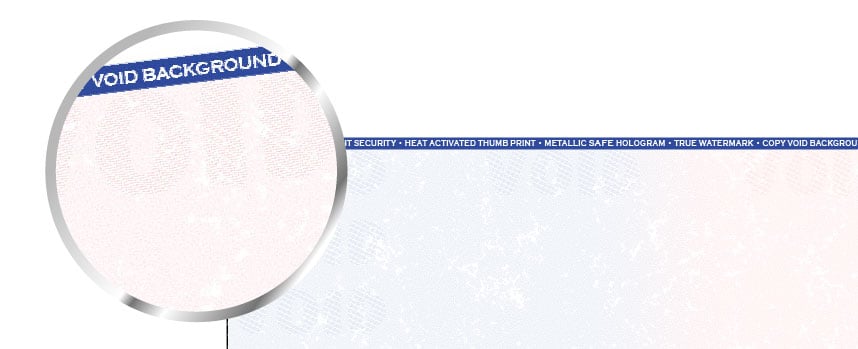
Typically used in security printing, pantographs are large background images on a document, usually a bank check. The pantograph helps to protect the check from fraud due to duplication or copying while adding some level of branding for marketing purposes.
-
The Pantone Matching System is a proprietary numbering system for colors used in graphic design/printing because it includes both solid (Spot Ink) and process colors (CMYK). This universal system translates colors through different operating systems/inks/warehouses to create a higher probability of printing the correct color.
Check out our guide about the difference between Spot Color and CMYK!
-
A type of printing process that prints on both sides of a sheet in a single pass.
-
A perforation is a small slit in a material such as paper, usually in an organized linear pattern. Perforations allow easy separation of two pages of material by tearing along the perforation line. Perforations can be made vertically or horizontally on a page.
-
A printing plate is a specially designed thin metal or plastic sheet that transfers ink onto paper, packaging, or other materials during the printing process. It acts as a stencil, holding the design or text to be printed. Printing plates are most commonly used in large-scale printing methods, like offset printing.
-
A draft of the artwork sent to customers prior to printing.
-
Self-cover books mean that both the inside and the cover is made of the same paper.
-
The material on which printing may be accomplished. Substrates may be paper, plastic, poly and other materials.
-
Also known as thermochromic, thermochromatic ink turns invisible or shifts color when it interacts with hotter temperatures. It is often used as a fraud deterrent on bank checks.
-
A Tri-fold brochure is commonly used in marketing campaigns because it is effective for promoting a brand and highlighting products and services. The tri-fold brochure is made of folds that divide the sheet into three equal panels. This results in a six-panel brochure. The standard size is the 8.5×11 Letter paper.
-
Unit Set form printing is a traditional continuous process. Typically, these forms use [carbonless paper] and are multi-part forms. CFC Print & Mail offers white, canary, and pink carbonless paper stock and can print up to 5-part forms!
-
A type of printing that involves information from a database that varies between each print piece. Mailing pieces with different names and addresses is an example of VDP.
-
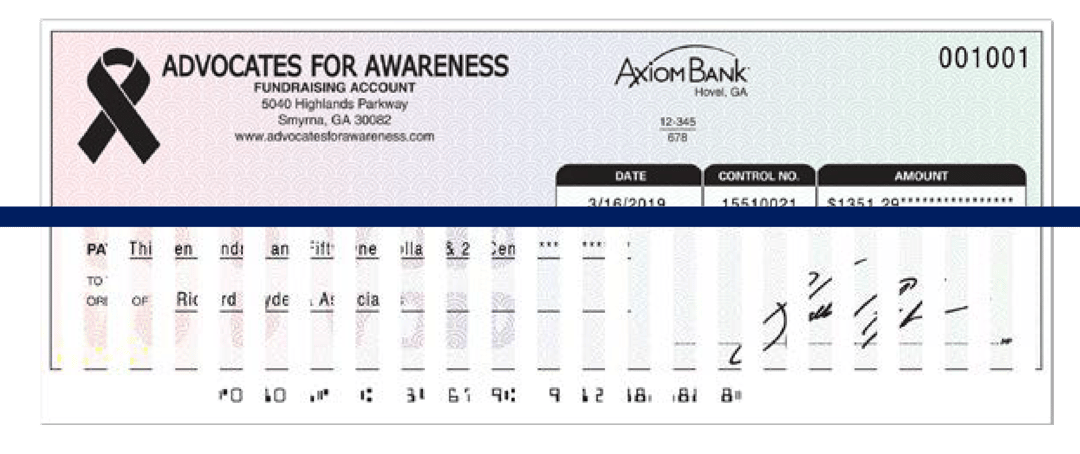
VDot blocks the copying of the document on most commercial color copiers and scanners. V-Dot technology is usually only available when the document is created on traditional presses or commercial digital printers but with this unique stamp the critical elements of the technology cause copiers to fail to acceptably reproduce the document. In most cases the copier will respond to copy requests by stating it is not allowed to copy legal tender or currency.
-
Also called an accordion fold, a Z-fold brochure opens into a Z shape and fans out.